Electric cars are growing fast. Tesla is one of the most famous names.
Still, many people worry when they hear news about a Tesla explosion.
This topic can sound scary. It is also often confusing.
A Tesla explosion usually does not mean the car suddenly blows up.
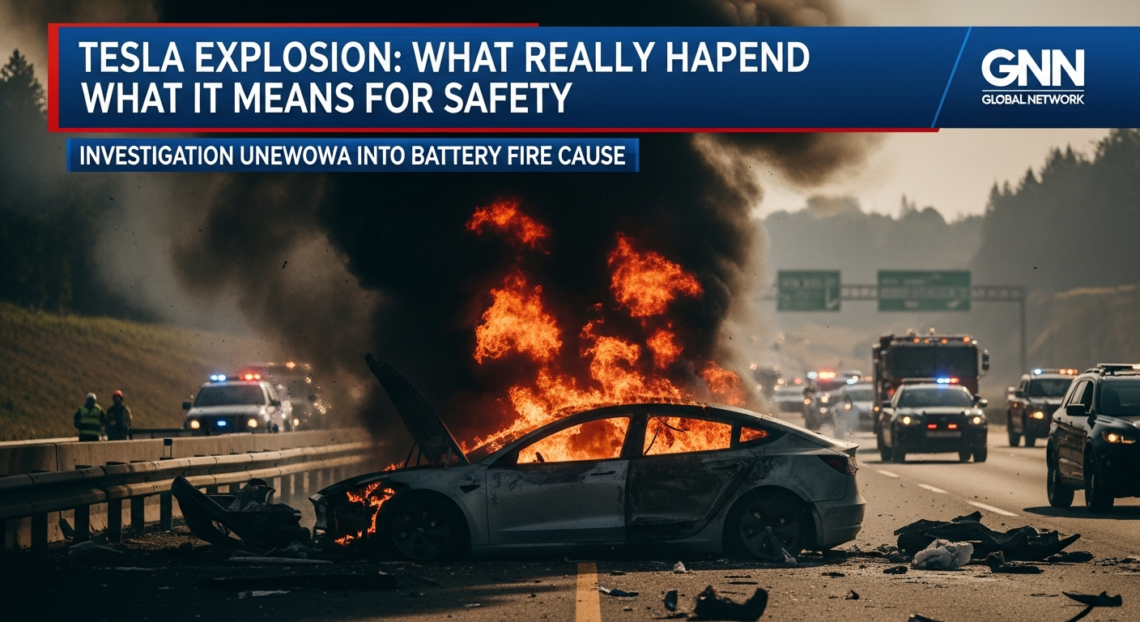
Most cases involve a battery fire after a crash.
Gas cars also catch fire, but EV fires look different.
That is why people talk about them more.
In this guide, I will explain the Tesla explosion topic in very simple words.
You will learn what causes it, how often it happens, and why it gets attention.
I will also share real examples and safety facts.
My goal is to help you feel informed, not afraid.
What Is a Tesla Explosion in Simple Words
A Tesla explosion usually means a battery fire.
It is not like a movie explosion.
It happens when the lithium-ion battery gets damaged.
When a Tesla crashes hard, the battery can overheat.
This heat can start a fire.
Sometimes the fire reignites hours later.
People use the phrase Tesla explosion because flames can be strong.
The sound can also be loud.
That makes it look worse than it is.
In reality, this is called thermal runaway.
Many devices use lithium batteries, even phones.
Tesla batteries are larger, so fires last longer.
Why Tesla Explosion News Spreads So Fast Online
Tesla is a famous brand.
Anything involving it spreads quickly.
A Tesla explosion video gets clicks and shares.
News headlines often use scary words.
This creates fear before facts are known.
Gas car fires happen daily.
Most never make the news.
Tesla fires are rare but highly visible.
Social media also plays a role.
Short clips lack full context.
People react emotionally instead of logically.
That is why it feels like Tesla explosions happen often.
The truth is different.
Main Causes Behind a Tesla Explosion
The most common cause is a high-impact crash.
The battery gets crushed or pierced.
Another cause is external fire exposure.
If another vehicle burns, the Tesla battery can ignite.
Flood damage is rare but possible.
Saltwater can damage battery systems.
Charging problems are very uncommon.
Tesla chargers have many safety layers.
Tesla explosions do not happen randomly.
There is always a trigger event.
How Tesla Batteries Are Designed for Safety
Tesla uses strong battery shields.
They are made to absorb impact.
Each battery pack has firewalls.
These slow down fire spread.
Cooling systems control battery heat.
Sensors monitor temperature constantly.
If danger is detected, power shuts down.
Doors unlock automatically.
Tesla updates safety features through software.
This improves protection over time.
These designs reduce Tesla explosion risk greatly.
Tesla Explosion vs Gas Car Fire Comparison
Gas cars carry liquid fuel.
Fuel ignites very fast.
Tesla batteries burn slower.
They release energy over time.
Firefighters say EV fires are harder to cool.
But they happen less often.
Gas car fires kill more people each year.
They just get less attention.
Both types have risks.
Neither is perfect.
Real Tesla Explosion Cases Explained Clearly
One well-known Tesla explosion happened after a high-speed crash.
The car hit a tree and caught fire.
Investigators found battery damage.
No explosion occurred before the crash.
Another case involved a garage fire.
The fire started outside the car.
In both cases, headlines were misleading.
The cause was later confirmed.
This shows why waiting for facts matters.
Is Autopilot Linked to Tesla Explosion Incidents?
Autopilot is a driver-assist system.
It does not drive fully on its own.
Some Tesla explosion stories mention Autopilot.
Most are not directly connected.
Crashes often involve speeding or driver error.
Autopilot misuse is a separate issue.
Tesla clearly tells drivers to stay alert.
Hands must stay on the wheel.
Blaming Autopilot without proof spreads confusion.
What Fire Experts Say About Tesla Explosion Risk
Fire experts say Tesla explosion risk is very low.
EV fires are less frequent than gas fires.
However, EV fires need special training.
Fire crews now use new methods.
Cooling batteries takes more water and time.
That is why scenes look intense.
Experts agree Tesla designs are improving fast.
Safety data supports this.
How Tesla Responds After an Explosion Report
Tesla works with investigators.
They share vehicle data logs.
Software updates are released if needed.
Recalls happen when required.
Tesla also trains fire departments.
Emergency guides are shared worldwide.
This shows responsibility and transparency.
Tesla Explosion Statistics You Should Know
Tesla vehicles travel billions of miles yearly.
Explosions or fires are extremely rare.
Reports show fewer fires per mile than gas cars.
This data comes from safety agencies.
Numbers matter more than headlines.
They tell the real story.
How Drivers Can Reduce Tesla Explosion Risk
Always follow charging guidelines.
Use approved chargers only.
Drive safely and avoid high speeds.
Most fires follow major crashes.
Avoid deep floodwater.
Get inspections after accidents.
These simple steps improve safety greatly.
Tesla Explosion Myths vs Facts
Myth: Teslas explode randomly.
Fact: They need extreme damage.
Myth: Charging causes explosions.
Fact: Charging fires are very rare.
Myth: EVs are unsafe.
Fact: Data shows strong safety records.
Knowing facts removes fear.
FAQs About Tesla Explosion
1. Can a Tesla explode while parked?
It is extremely rare.
Most cases involve prior damage.
2. Are Tesla batteries dangerous?
They are heavily protected and monitored.
3. Do Teslas explode more than gas cars?
No. Gas cars catch fire more often.
4. Can charging cause a Tesla explosion?
Almost never. Charging systems are very safe.
5. Are Tesla explosions deadly?
Fatal cases are rare and linked to crashes.
6. Should I fear buying a Tesla?
No. Data shows strong safety performance.
Final Thoughts: Should You Worry About Tesla Explosion?
A Tesla explosion sounds frightening.
The reality is far less dramatic.
Most cases involve serious crashes.
Tesla vehicles are built with many safety layers.
As someone who studies EV safety trends,
I trust the data over headlines.
Electric vehicles are improving fast.
Tesla continues to raise safety standards.